In the realm of architectural design and environmental control, the pursuit of innovation is a constant endeavour. As the colder months approach, the age-old debate over heating methods resurfaces: traditional heating methods versus the modern alternative, air conditioning. When it comes to modern-day technologies, air conditioning emerges as a beacon of efficiency, sustainability, versatility and comfort, challenging long-held perceptions and reshaping the way we conceive of winter warmth.
Traditional heating such as fires, gas heaters and fan heaters have been the stalwarts of winter comfort. Yet, their limitations are becoming increasingly apparent in an era defined by sustainability and technological advancement. Air conditioning, once relegated to cooling duties, has undergone a transformative evolution, emerging as a versatile solution for year-round thermal comfort.
Efficiency stands as a cornerstone of the argument for air conditioning in winter heating applications. Traditional heating methods often suffer from inefficiencies inherent in their design and operation. Fires require constant fuel replenishment, emit pollutants, and offer limited control over temperature distribution. Gas heaters and fan heaters, while providing immediate warmth, are notorious energy guzzlers, contributing to high utility bills and carbon footprints. In contrast, modern air-conditioning systems leverage advanced technologies like heat pumps to efficiently transfer heat from the outdoor environment to the indoors, offering consistent warmth while minimising energy consumption.
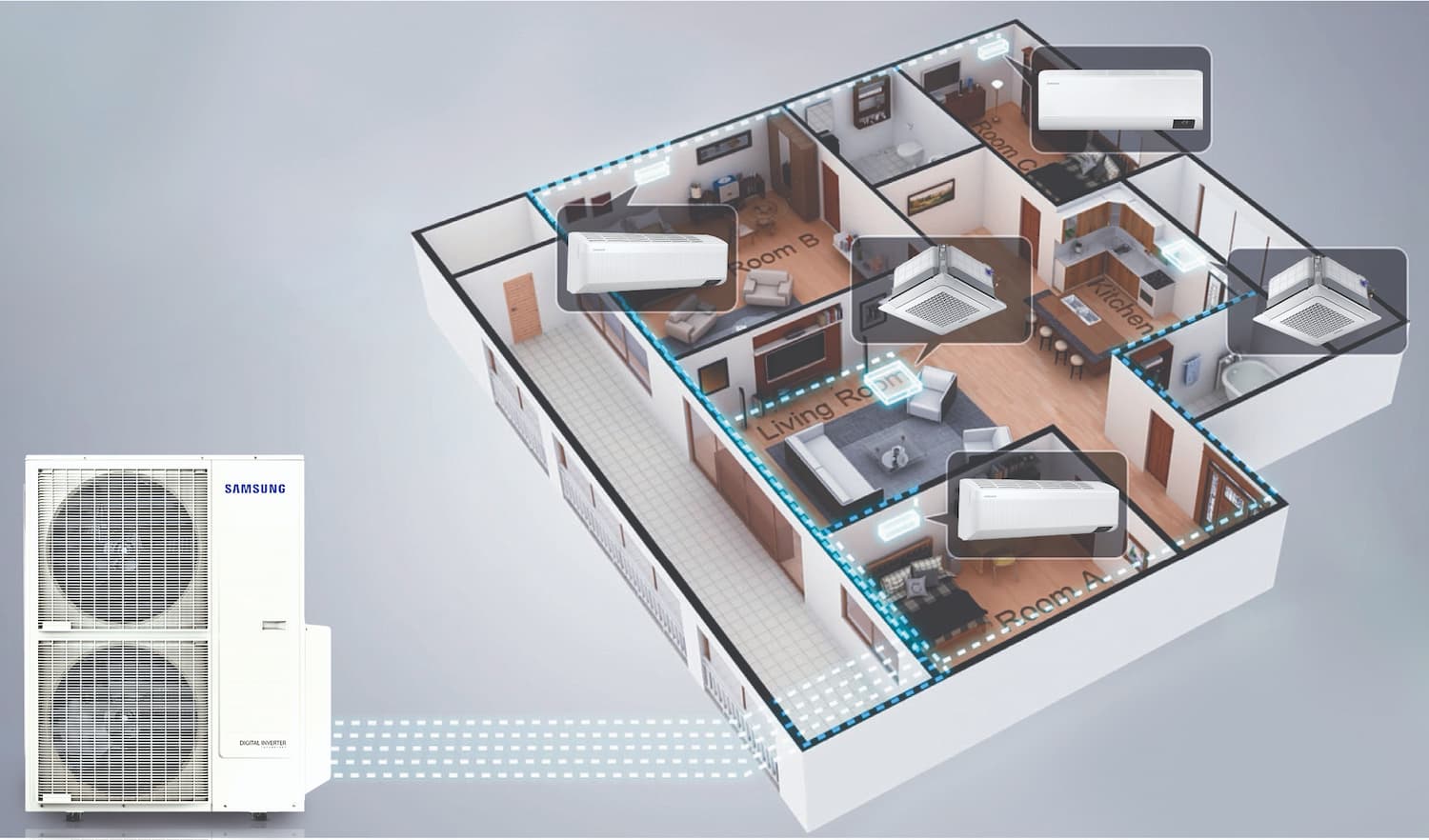
Versatility emerges as another compelling argument in favour of air conditioning for winter heating, which can seamlessly transition between heating and cooling modes, ensuring year-round comfort regardless of external conditions. Moreover, the integration of smart controls and zoning capabilities found in the Samsung DVM and Free Joint Multi systems enhances flexibility, allowing precise temperature management on a room-by-room basis, allowing occupants to tailor temperature settings to individual preferences while optimising energy usage.
Sustainability lies at the heart of the argument for embracing air conditioning as a primary heating solution. With growing concerns about climate change and environmental degradation, the imperative to reduce carbon emissions has never been more pressing. Air-conditioning units, particularly inverter aircons powered by high-efficiency heat pumps, or utilising low-carbon refrigerants like R32 gas, offer a pathway to reducing these carbon emissions without compromising comfort. By embracing these eco-friendly alternatives, designers can play a pivotal role in aligning their projects with principles of sustainable design and mitigating the built environment’s environmental impact.
The case for air conditioning as the preferred method of winter heating in modern design is compelling and multifaceted and embodies a commitment to efficiency, versatility and sustainability. These principles redefine our approach to thermal comfort and driving innovation in architectural practice. As stewards of the built environment, it is incumbent upon us to embrace advancements and progress where warmth is not just a luxury, but a conscientious choice grounded in principles of sustainability and stewardship of climate control.