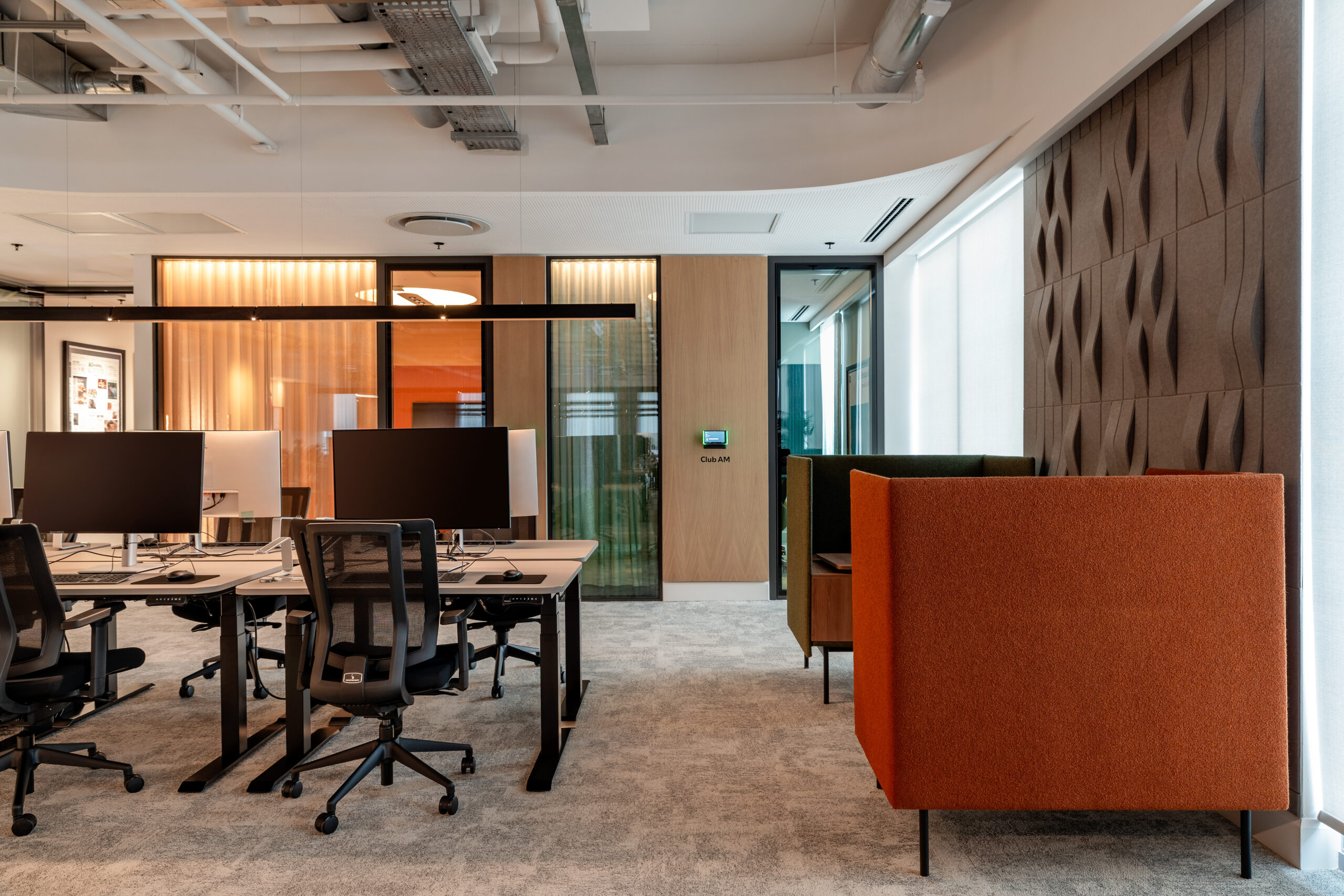
In today’s evolving work environment, South African businesses are rethinking their approach to office spaces. With hybrid work models, rising operational costs and shifting workforce expectations, the traditional view of offices as mere cost centres is no longer sufficient. Rather, companies are beginning to see their workplaces as strategic assets that can drive productivity, reduce costs and attract top talent. By combining smart technologies with human-centred design, organisations can create spaces that not only optimise efficiency but also enhance employee wellbeing and collaboration.
The challenges of modern office spaces
The shift to hybrid work has brought both opportunities and challenges. While remote work offers flexibility, it has also led to issues such as digital burnout and weakened team connections. Simultaneously, many office spaces remain underutilised, with global utilisation rates hovering around 55–65%. In South Africa, high energy and operational costs further complicate the equation, making it essential for businesses to rethink how they use and manage their office spaces.
The role of smart technology in optimising office costs
Smart technologies, such as AI, occupancy sensors and workplace analytics, are revolutionising the way companies manage their office spaces. These tools provide data-driven insights that help organisations optimise space utilisation, reduce waste and improve the overall employee experience. For example, AI can analyse patterns of space usage to identify inefficiencies, while occupancy sensors can track real-time usage to ensure that resources are allocated effectively.
According to data from JLL, many corporates are already piloting AI in their real estate functions, recognising its potential to deliver significant cost savings and operational efficiencies. By leveraging these technologies, businesses can not only cut costs but also create more sustainable and energy-efficient workplaces.
Human-centred design: The key to employee engagement and retention
While technology plays a crucial role in optimising office spaces, it is equally important to focus on the human element. Human-centred design prioritises the needs and wellbeing of employees, creating environments that foster engagement, collaboration and innovation. Flexible layouts, natural lighting and spaces designed for both individual and team activities can significantly enhance the employee experience.
When combined with smart technologies, human-centred design can transform underutilised office spaces into vibrant hubs of productivity and creativity. This approach not only improves employee satisfaction but also helps companies attract and retain top talent in a competitive job market.
Success stories: Transforming workplaces with smart solutions
Trend Group, a leader in workplace transformation, has demonstrated the power of combining smart technologies with human-centred design through several successful projects. For instance, their work with BASF South Africa and Boston Consulting Group showcases how tech-enabled workplace transformations can deliver tangible benefits. These case studies highlight the potential for businesses to turn their office spaces into strategic assets that drive both efficiency and employee engagement.
Steps to transform your office space
For businesses looking to rethink their office costs and optimise their spaces, the following steps are recommended:
- Measure utilisation: Use occupancy sensors and workplace analytics to understand how your office space is currently being used.
- Pilot smart technologies: Experiment with AI and other smart tools to identify inefficiencies and gather actionable insights.
- Invest in human-centred design: Redesign your office space to prioritise employee wellbeing, engagement, and collaboration.
- Convert underused space into strategic assets: Use the insights gained from smart technologies and design principles to create a workplace that aligns with your business goals.
By taking these steps, organisations can transform their office spaces into environments that not only reduce costs but also enhance productivity and employee satisfaction.
The future of work demands a new approach to office spaces. By viewing workplaces as strategic assets rather than cost centres, South African businesses can unlock significant value. Smart technologies and human-centred design offer a powerful combination for optimising office costs, improving sustainability, and fostering a culture of innovation and collaboration. As companies navigate the challenges of hybrid work and rising operational costs, rethinking office strategies will be key to staying competitive in a rapidly changing world.